
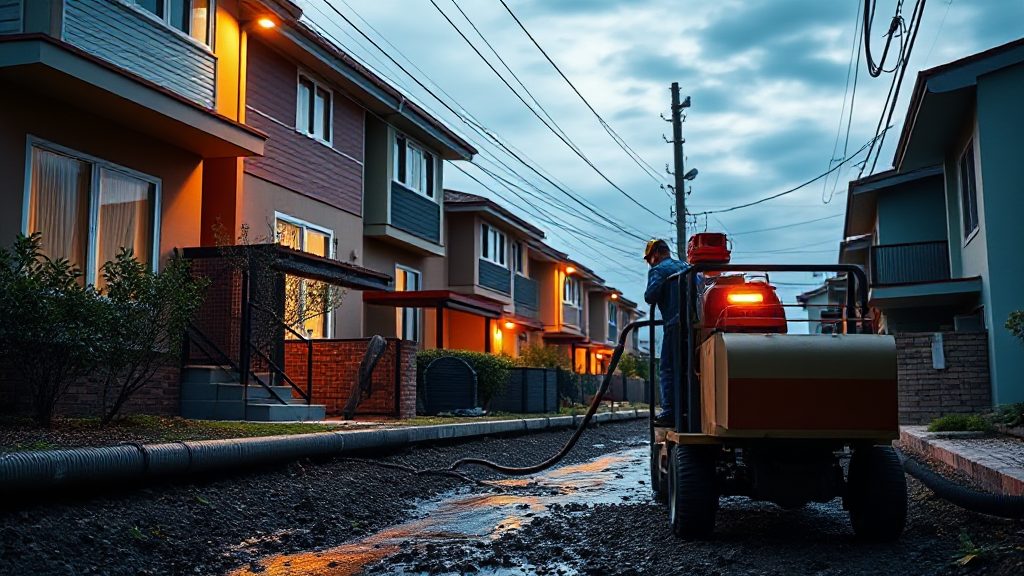
One Stack, Many Homes: Shared Drains in Brooklin Low-Rises
When a ground-floor apartment in a Brooklin low-rise floods, the cause is rarely in that unit. More often, a clog three floors up has backed up through a shared vertical stack, and the lowest fixture becomes the first place water escapes. This is the everyday reality of collective plumbing in São Paulo’s low-rise buildings, and it is why a desentupidora Campo Belo São Paulo SP is frequently called to a building where only one family noticed the problem — yet every household shares the cause.
Understanding how stacks, venting and shared responsibility work turns a panic call into a coordinated fix. If you own or manage a unit in a Brooklin low-rise, the goal is to find the blockage before it reaches the neighbors below and to agree on who handles the repair.
Why a Clog Three Floors Up Floods the Ground Floor
Gravity is the only force moving waste down a building’s drainage stack. When grease, wipes, hair or scale narrow the pipe, water still flows — but slower. The next flush from an upper unit arrives before the previous one has cleared, and the stack begins to hold water. The lowest connected fixture, usually a floor drain or shower tray on the ground floor, becomes the relief point.
The backup is a symptom, not the source. That distinction matters because mopping the ground-floor unit without clearing the stack guarantees the flood returns the next time someone upstairs showers. Residents in Campo Belo often describe this pattern: a dry week, then a sudden overflow after a family above does laundry.
Low-rises add a twist. With only three or four floors, the stack carries less volume, so small obstructions can sit unnoticed for months. There is no high-rise pressure to push the problem into view. The first sign is often a slow drain or a gurgling sound, not a dramatic flood.
The Anatomy of a Shared Stack in a Low-Rise
A typical Brooklin low-rise has one or two vertical stacks serving all units, with branch lines connecting each kitchen, bathroom and service area. At the base, the stack turns horizontally toward the street connection or the building’s inspection box. Every fixture on that line depends on the same clear path.
Vertical stack and branch lines
The vertical stack is the main artery. Branch lines feed into it from each floor, and each branch has its own trap to block sewer gas. When a branch trap dries out or a branch line clogs, the problem stays local. When the stack itself narrows, every branch above the blockage is affected.
Floor drains and the lowest point
Ground-floor floor drains and shower trays sit at the lowest point of the system. They are the first to overflow when the stack holds water. In many low-rises, these drains also collect sand, soap residue and construction debris over the years, so they clog faster than the stack itself.
Inspection boxes and the street connection
The inspection box, usually near the sidewalk or garage, is where the building’s internal line meets the public network. Roots, grease and settled debris can block this section, and the backup then appears at the lowest fixtures inside the building. A camera inspection from the box often reveals whether the problem is inside the stack or already in the street connection.
Venting: The Invisible Reason Drains Gurgle
Every stack needs air behind the water. Vent pipes run from the drainage system to the roof, equalizing pressure as waste flows down. Without proper venting, a slug of water creates a vacuum that siphons the water out of nearby traps, letting sewer gas into the units.
Gurgling and sewer smell are venting warnings. When a low-rise resident hears a drain gurgle after a neighbor flushes, or notices a rotten-egg odor in a bathroom, the vent may be blocked by a bird nest, leaves or a collapsed section. Clearing the drain without checking the vent often leaves the smell behind.
Venting problems also mimic clogs. A slow drain that clears itself after a few minutes may not be blocked at all — it may be struggling against pressure imbalance. A technician who inspects both the drain and the vent avoids the common mistake of repeated mechanical clearing with no lasting result.
Who Is Responsible When the Shared Line Fails
In a condominium, the vertical stack and the main line to the street are collective infrastructure. Repairs to those parts are typically the building’s responsibility, while the branch line inside a unit usually falls to the owner. The practical difficulty is proving where the blockage sits before anyone agrees to pay.
A camera inspection and a written report resolve most disputes. The report shows the exact point of obstruction, so the síndico can authorize the collective repair and the affected owner can handle their own branch. Calling a desentupidora Campo Belo early, before water damages multiple units, keeps the conversation about maintenance instead of blame.
For landlords and administrators, prevention is cheaper than arbitration. Scheduled hydrojetting of the stack and inspection-box cleaning remove grease and scale before they close the pipe. A simple log of past blockages helps the building spot a recurring section that needs relining or replacement rather than another emergency call.
Coordinating a Building-Wide Response
The most effective response starts with communication. When a ground-floor unit floods, the síndico should notify all residents on the stack, ask them to limit water use, and arrange access for the technician to inspect from the top floor down. This avoids the frustrating cycle of clearing one branch while the real blockage sits higher up.
Emergency teams that serve the region, such as a desentupidora em Campo Belo São Paulo SP, can work at night or between scheduled hours to reduce disruption. The technician should document the stack condition, recommend whether hydrojetting or camera inspection is needed, and advise on vent checks so the building does not repeat the same call in a few months.
After the repair, a short building meeting pays off. Agree on what cannot be flushed, set a date for preventive cleaning, and keep the inspection report on file. In a low-rise, one shared stack means one shared plan — and the ground-floor family should never be the only ones who know the drain is struggling.